


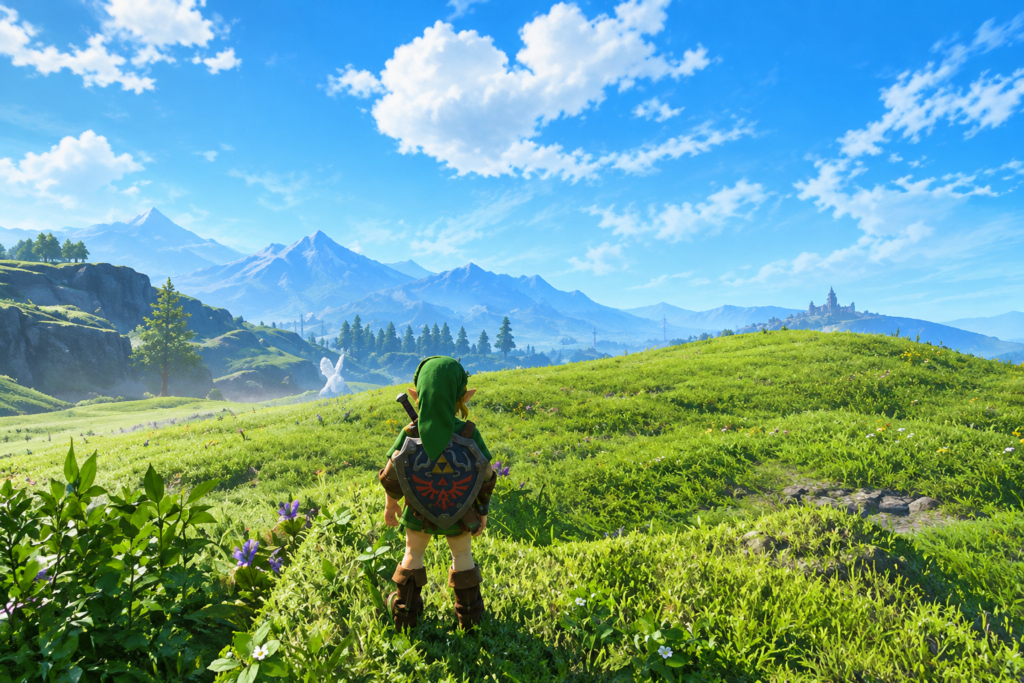
One of gaming’s most celebrated adventures is returning with a major visual upgrade. Nintendo is remaking The Legend of Zelda: Ocarina of Time for the Nintendo Switch 2, bringing the classic 1998 adventure into a new generation with upgraded graphics, a newly orchestrated soundtrack and modern gameplay improvements. The remake is scheduled to launch on November 5, 2026.
For longtime fans, the return of Link and the kingdom of Hyrule offers a chance to revisit a landmark game. For new players, it provides an opportunity to experience the adventure without the limitations of the original Nintendo 64 hardware. But what has actually changed, and will the remake preserve what made the original so memorable?
What Is The Legend of Zelda: Ocarina of Time?
Originally released in 1998 for the Nintendo 64, Ocarina of Time is an action-adventure game in which players control Link, a young hero who must protect the kingdom of Hyrule from the threat posed by Ganondorf.
The adventure combines exploration, combat, puzzles and dungeon challenges. Players travel through forests, villages, temples and other locations while collecting equipment and learning abilities that help them progress.
One of the game’s defining features is the ability to travel between childhood and adulthood, changing how Link experiences the world and solves certain puzzles.
The original game became influential because it helped establish many conventions used in later 3D action-adventure games, including context-sensitive controls, target-locking combat and environmental puzzles.
The new version aims to preserve that foundation while improving the experience for modern players.
What’s New in the Switch 2 Remake?
Nintendo has rebuilt the experience with updated visuals and several gameplay changes. A hands-on preview published by The Guardian on October 14 described a more detailed version of Hyrule alongside changes to movement, camera controls and the game’s soundtrack.
1. Sharper Graphics and a More Detailed Hyrule
The remake gives Hyrule a substantial visual upgrade, with more detailed environments, improved lighting, richer scenery and modern character models.
Forests, rivers, buildings and open areas are presented with more visual detail than the Nintendo 64 original could deliver. The updated presentation is designed for modern displays, including the Switch 2’s higher-resolution output.
The character designs have also changed. Link’s updated appearance has attracted debate among fans, showing how difficult it can be to modernise a classic while preserving its original visual identity.
The new graphics are more than a resolution increase. They change how the familiar world looks and feels while keeping its recognisable locations and overall structure.
2. Link Can Sprint and Jump More Naturally
Movement is one of the most noticeable gameplay improvements.
The original game relied on movement systems that can feel restrictive to players accustomed to modern action-adventure games. In the remake, Link can sprint and perform a manual jump.
These changes make movement across Hyrule more direct and responsive. They also reduce some of the friction involved in travelling between locations.
However, Nintendo has not turned the game into a completely open-ended adventure. Its level design and progression still draw on the original game’s more structured approach.
3. A Free-Rotating Camera
Camera control is another important change.
The original Ocarina of Time helped popularise target-locking combat, but its camera system reflects the limitations and design conventions of its time.
The remake introduces a free-rotating camera, allowing players to look around the environment more naturally. This can help when exploring unfamiliar locations, viewing scenery or preparing for combat.
For players who have grown up with modern 3D games, this adjustment should make the experience feel more familiar without removing its classic puzzle-solving foundations.
4. A Better Inventory System
The original game frequently required players to open menus to select equipment and items.
The remake introduces a scrolling inventory bar that makes switching between items more convenient. This reduces interruptions during exploration and combat.
The change may appear small, but it can make a substantial difference during longer sessions. Players can spend more time solving puzzles and exploring rather than navigating menus.
These quality-of-life improvements show how a remake can modernise an older game without completely redesigning its central mechanics.
5. A Newly Orchestrated Soundtrack
Music has always been an essential part of Ocarina of Time.
The remake features a newly orchestrated soundtrack, giving familiar melodies a richer presentation. The music accompanies exploration, important story moments and battles, helping create the atmosphere of Hyrule.
The original soundtrack became memorable partly because of the hardware limitations of the Nintendo 64. The new arrangement gives those compositions more room to develop while retaining their connection to the original game.
For returning players, the music could be one of the most recognisable parts of the experience.
Is the Story Different From the Original?
The remake continues to follow the central story of Link, Hyrule and the threat posed by Ganondorf.
The main appeal is not a completely new storyline. Instead, it is the opportunity to experience the established adventure with updated presentation and more convenient controls.
Players can expect exploration, dungeon puzzles, equipment upgrades, boss battles and the journey between Link’s childhood and adulthood to remain central to the experience.
Nintendo’s approach appears to focus on improving how the game feels to play rather than replacing the original’s identity.
This matters because Ocarina of Time is remembered not only for its story but also for the way its puzzles, locations and progression work together.
Why Is This Remake Such a Big Deal?
Ocarina of Time is more than a nostalgic release. It is one of the games that helped shape the design of modern 3D adventures.
Its approach to camera control, combat targeting, puzzle design and environmental progression influenced many games that followed.
Revisiting it also gives newer players a way to understand the roots of a franchise that later expanded through games such as Breath of the Wild and Tears of the Kingdom.
At the same time, remaking a beloved game creates high expectations. Fans want improved controls and visuals, but they also want the atmosphere, memorable moments and challenge that made the original special.
The new version must balance these goals without making the experience feel like a different game.
When Does Ocarina of Time Release on Switch 2?
Nintendo has scheduled the remake for November 5, 2026, exclusively for Nintendo Switch 2.
The company has published an overview trailer and opened the game’s official product page. Players should check Nintendo’s regional store for confirmed pricing, preorder availability and any regional differences.
Because the remake is designed for Switch 2, owners of the original Nintendo Switch should not assume that the new version will run on their existing console.
Anyone planning to buy the game should also check whether a physical edition, digital edition or special edition is available in their market.
Will It Be Worth Playing for Newcomers?
The remake could be an appealing starting point for players who have never experienced Ocarina of Time.
The updated camera, movement options and inventory system address several aspects of the original that can feel dated today. Improved graphics and sound also make the adventure more accessible to players using modern screens and audio equipment.
However, it remains a structured action-adventure game rather than a modern open-world title. Players should expect dungeon exploration, deliberate puzzle-solving and a progression system built around unlocking new abilities.
Those looking for a huge open world with complete freedom may prefer other entries in the franchise. Players interested in classic adventure design, memorable dungeons and a strong sense of progression may find the remake particularly rewarding.
The Challenge of Remaking a Classic
The new Ocarina of Time demonstrates both the opportunity and the risk involved in modernising a beloved game.
Better graphics, smoother controls and an updated soundtrack can make a classic easier to enjoy on modern hardware. Yet changes to character design, movement and presentation can also divide longtime fans.
The remake’s success will depend on whether these changes improve the original experience without losing its personality.
With its November release approaching, the game is positioned to introduce a new generation of players to one of Nintendo’s most influential adventures.
For returning fans, the question is whether Hyrule will feel just as magical in its new form. For newcomers, it is an opportunity to discover why this adventure has remained part of gaming history for nearly three decades.